Degreasing that reaches texture and grout
We use alkaline degreasers and mechanical agitation to break down cooked-on oils embedded in quarry tile, safety tile, and textured ceramic. Grout lines get dedicated attention instead of a quick pass.
Serving Washington, District of Columbia & surrounding areas
Mon–Fri 8am–6pm Sat 9am–2pm
Restaurant Floor Cleaning · Washington, DC
Cut grease buildup, improve traction underfoot, and keep tile and grout inspection-ready with after-hours service built around restaurant operations in Washington, DC.
Restaurant Floor Care
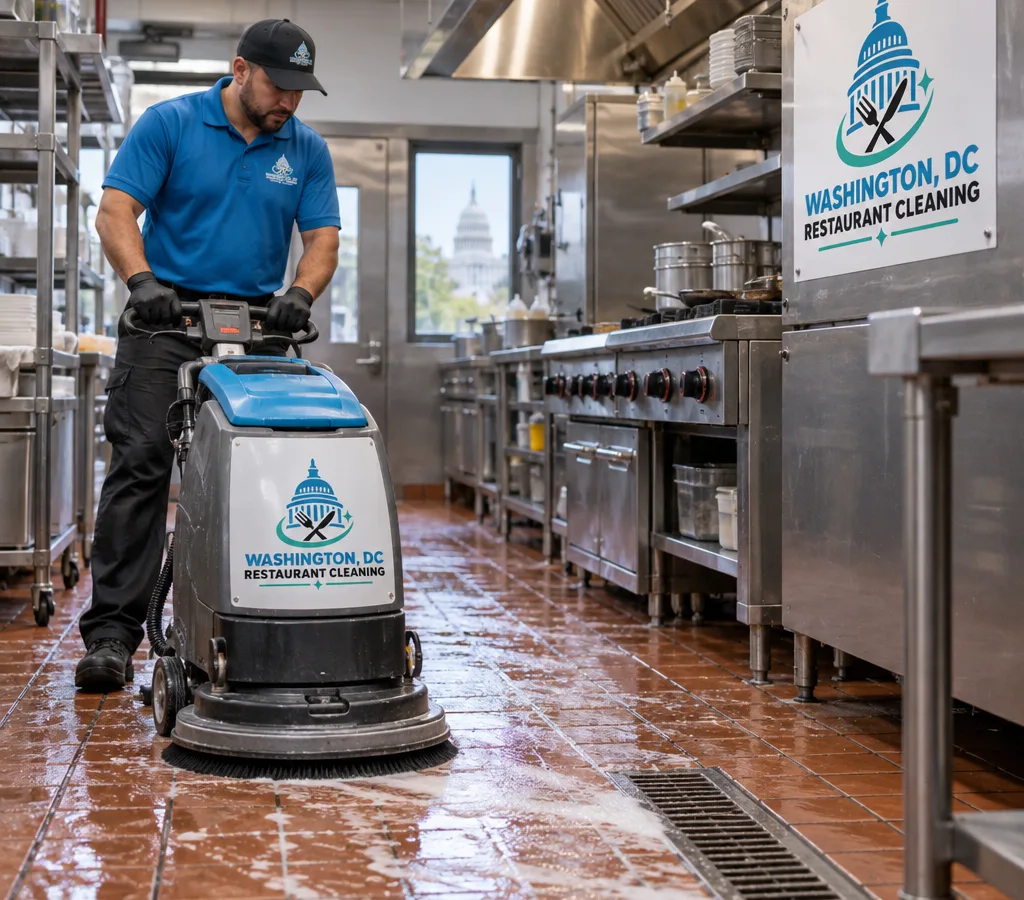
Commercial Kitchen Floor Cleaning in a restaurant kitchen is about removing the slippery layer that forms when cooking oils, food soils, and detergents combine and cure into a film. Mopping can spread that residue around. Proper cleaning uses commercial degreasers, agitation, and recovery so the soil leaves the building instead of drying back onto the tile.
Washington, DC Restaurant Cleaning provides Restaurant Floor Cleaning Services for working kitchens, dish rooms, service corridors, and prep areas. We focus on traction and hygiene: deep scrubbing to lift grease from textured tile, detail work along edges and corners, and Restaurant Grout Cleaning that clears darkened joints where soils pack in.
Restaurants in DC run tight shifts and tighter footprints, especially in high-traffic areas like Union Market, Navy Yard, and Downtown corridors where deliveries and staff movement stay constant. Our approach is set up to work around your operations with practical scheduling, clear expectations, and a written scope so the results match what managers and inspectors look for.
Included Work
We use alkaline degreasers and mechanical agitation to break down cooked-on oils embedded in quarry tile, safety tile, and textured ceramic. Grout lines get dedicated attention instead of a quick pass.
We prioritize zones where traction matters most: fry stations, dish areas, walk paths between prep and line, and transitions near mats, thresholds, and floor drains.
Edges at coved base, corners behind doors, under stainless overhangs, and around fixed penetrations collect the heaviest soil. Those spots get hand work after the main scrub.
Kitchen Floor Degreasing should not flood the space. We manage dwell time, rinse, and vacuum recovery to keep water where it belongs and reduce dry-down time.
Most commercial kitchens need cleaning completed between shifts. We plan equipment access, start points, and dry paths so you can reopen on time.
Tile and grout respond differently than sealed concrete or epoxy-coated areas. We adjust chemistry, brush selection, and rinse technique to fit what is installed.
Tile & Grout Recovery
Restaurant Tile Cleaning is most effective when it is treated like a restoration job, not a quick maintenance mop. We start by identifying the floor surface (commonly quarry tile in kitchens) and the main soil type. In restaurant kitchens that is typically animal fats, vegetable oils, proteins, and tracked-in carbon.
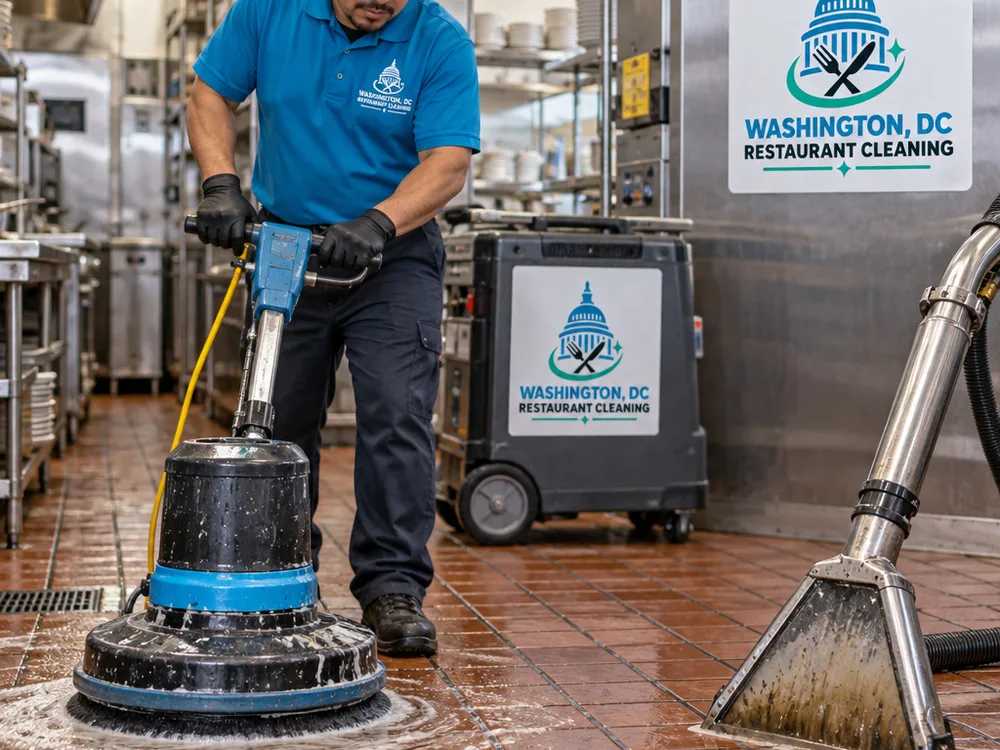
We apply a degreaser with enough dwell time to soften buildup, then scrub using a rotary or cylindrical brush machine chosen for the tile texture. Grout lines are where soil compacts; Restaurant Grout Cleaning may include a tighter brush pattern and edge tools to lift what machines miss. We rinse and recover with wet vac extraction so dirty solution does not dry back into the floor.
For Washington kitchens with multiple zones, we stage the work so managers can keep essential access: we clean and dry one path at a time, then finish the tight spots around corners, kick plates, and doorways. If floors are sealed, we avoid overly aggressive chemistry that can dull or strip finishes unless that is part of the written plan.
If your operation needs broader support beyond floors, our restaurant cleaning programs can coordinate recurring back-of-house cleaning so floors stay safer between deep services.
Our Process
We confirm the surfaces and problem areas: line zones, dish room, mop sink area, entrances, and any transitions to sealed concrete or epoxy coatings.
We set a clean path for staff access, move what can be moved safely, and protect nearby bases and sensitive items as needed.
We apply the appropriate Kitchen Floor Degreasing chemistry, allow controlled dwell time, then machine-scrub to lift grease from texture and grout.
We rinse thoroughly and vacuum-recover the slurry. This step matters: it removes the soil you just loosened instead of leaving it behind.
We hand-scrub edges and tight areas machines do not reach. Around floor drains we focus on the ring where buildup commonly accumulates.
We confirm traction and appearance, review any persistent staining or grout discoloration, and share a realistic maintenance plan for your specific floor.
Pricing Guidance
Commercial Kitchen Floor Cleaning in Washington, DC typically ranges from about $250 to $900+ per visit for most restaurant kitchens, depending on floor area, grease load, and access around equipment. Smaller dish rooms or single-zone scrubs may land at the lower end, while large kitchens with heavy fryer residue, textured tile, or extensive grout restoration run higher.
Price changes with square footage, floor type (quarry tile vs sealed concrete), degree of buildup, edge detail needed, after-hours scheduling, and whether rinse water recovery is limited by drains. Exact pricing is confirmed after a walkthrough and a written scope for your kitchen.
Restaurant Manager Feedback
“We had a slick area near the fryers that never looked clean even after nightly mopping. After the deep degrease, the grout lines lightened up and the floor felt safer during rush.”
“They worked around our tight close-to-open window and didn't leave puddles or residue. The tile looked uniform again, especially along the cove base where buildup was obvious.”
Common Questions
Most restaurants do best with deep Kitchen Floor Degreasing every 4 to 12 weeks, with the right interval driven by fryer use, foot traffic, and how textured the tile is. A busy line with heavy oil aerosol and frequent spills needs more frequent deep service than a lighter-production prep kitchen. We can recommend an interval after we see the soil load and the floor's traction.
Yes, Restaurant Grout Cleaning can significantly improve dark grout when the discoloration is trapped soil and grease, but it cannot change the grout's original color or reverse staining that has penetrated deeply. The best approach is a focused scrub with the right brush profile, followed by thorough rinse and recovery so loosened soils don't settle back into the joints.
Yes, quarry tile is common in restaurant back-of-house areas because it's durable and slip resistant, but it also holds grease in its texture. We use degreasers designed for food soils and machine scrubbing that reaches the surface texture, then recover the slurry so the tile doesn't feel tacky after it dries.
Yes, after-hours service is common for Restaurant Floor Cleaning Washington jobs because kitchens can't shut down for long. We plan the workflow to keep a dry exit path and prioritize the line and dish areas first, then detail the edges and corners so the kitchen can reopen reliably.
Indoor pressure washing can cause problems if it forces water into wall bases, under equipment, or into areas that can't dry quickly. In most kitchens, controlled scrubbing with measured rinse and wet vacuum recovery is safer and more predictable than blasting water. If pressure is used, it should be limited and paired with strong recovery and containment.
The most helpful prep is clearing movable items from the floor and identifying any equipment that can be rolled out safely. If you have floor mats, having them pulled up lets us address the greasy perimeter where mats trap soil. We'll confirm access needs in advance so your staff isn't guessing during a busy close.
Tell us what type of floor you have, the areas that stay slick, and the service window that works for your restaurant. We'll provide a written scope for Commercial Kitchen Floor Cleaning and schedule around your operations from our Washington location at 1647 Benning Rd NE, Unit 4.